Late PM of India Rajiv Gandhi visited the state of Meghalaya to inaugurate the Balphakram National Park on 27th Dec 1987. PM’s visit to Andhra Pradesh and Tamil Nadu., PM’s visit to Shantiniketan (W.B.)., PM dedicates Hydro-Electric Project.
September 11 and Osama bin Laden have been turned into theatre drama by a production house in India. Recent American and world history have been turned into a play by Shankerdev Theatre, one of the top mobile theatre groups in Assam. In the play, a young Assamese man, Partha Kakoty, is a reporter with The New York Times when Osama bin Laden sends aeroplanes into the World Trade Center on September 11. Partha travels to Afghanistan, where his assignment is to interview bin Laden and ask him why he carried out such a terrible crime.
Film shows people of Tripura have been provided with plotted unreserved forested area by " Patta ", a resolution passed by the parliament in 2006 to distribute land Patta among the people near the forests. These people succeeded in improving quality of the forests.
Pang Lhabsol, Sikkim’s most important indigenous celebration, consists of a series of rituals and monastic dances held in honour of Sikkim’s chief mountain deity, Khangchendzonga, and all the land’s guardian deities. Considered the true custodian of the land, its people and resources, Khangchendzonga is also revered as the defender of the Buddha Dharma and the land’s peace and prosperity.
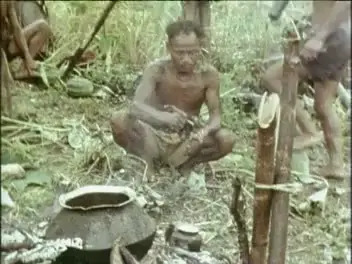
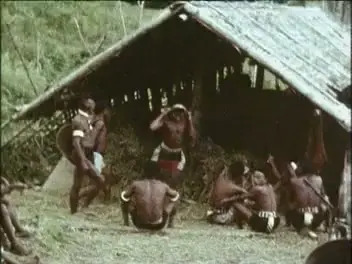
This film describes the variety of tribal population in India with their distinctive culture patterns, dress, decoration, dance and music. Tribal inhabitants of this country number some 25 milion and belong toa hundred and severty two different groups scattered through the length any breadth of this sub-continent. The hilly tracts of Central India are inhabited by the Gonds. The Santhals are to be found in Bihar, Orissa, Bengal and Assam while the Todas live in the Nilgiris of South India. The Bhills reside in the remote regions of Maharashtra State and Rajasthan and the Nagas in the lovely Assam hills.
The film draws as its theme a picture of the beautiful, lovely orchid flowers of Manipur, in their assorted varieties and environment. The connected lores are also emphasised.
Elephants are found in plenty in the jungles of South India, Assam and Orissa, Each elephant fetches anything between Rs. 3,000 and 8,000. Most elaborate arrangements are made to trap these wild animals and the risk involved in these operations is considerable. This documentary relates the exciting story of this hazardous adventure.
Ongdala is an eight year old tulku or reincarnate lama. The film follows his public examination which took place in the Sikkimese village of Lachen in January 2007. Ongdala recites his prayers in the presence of the village assembly and is then initiated and welcomed as a lama of the Lachen monastery. This is followed by Ongdala’s first performance as a Black Hat ritual dancer and participation in the village’s annual rituals. His father is the Rinpoche of Lachen and the reincarnation of the Lachen Gomchen, Alexandra-David Néel’s teacher in the early 1910s.
These few years single-parent families have become even more common than the so-called "nuclear family" consisting of a mother, father and children. Today we see all sorts of single parent families: headed by mothers, headed by fathers, headed by a grandparent raising their grandchildren. Life in a single parent household can be quite stressful for the adult and the children. Members may unrealistically expect that the family can function like a two-parent family, and may feel that something is wrong when it can not. The single parent may feel overwhelmed by the responsibility of juggling caring for the children, maintaining a job and keeping up with the bills and household chores. And typically, the family's finances and resources are drastically reduced following the parent’s breakup.
98 year old Kurak Pegu has worked hard throughout his life to survive and sustain along with his family in flood prone Majuli in Assam. He knows that the river Brahmaputra has been both very kind and harsh at the same time. He knows this river inside out and believes that the wisdom of this traditional knowledge has all the strength to cope with all the odds of nature. He is worried about the unpredictable weather changes – the monsoon becoming more erratic and floods more destructive.
The film shows the war that was fought between East Pakistan with West Pakistan. India fought against the West Pakistan and helped the East Pakistan to taste its freedom and a full fledged country came into existence, Bangladesh.
Formerly Assam, the Naga hills and Tuensang Division became a full-fledged state of Nagaland of the Indian union in 1963. In the first ten years of statehood, Nagaland has moved forward steadily to joined the mainstream of national progress.
Nagas, a self-ruled tribal nation, never surrendered their country to any power. They retained their self-rule despite the fact that the British imperialists partially occupied their land after fierce battle. But later on the Nagas became the victims of the British and its successors' (india) betrayal. The British, to meet its imperialist needs, merged some of its portion to British Myanmar and India. When the British left this part of the world, India and Myanmar, ignoring Naga aspiration and demand for independence, illegally occupied whole of Nagaland, something the British never tried to occupy. Such illegal occupation sharpened their struggle for Independent Nagalim and their spirit persists despite heavy sacrifice.
Tawang in Arunachal Pradesh is one of those fabulous destinations, which is fascinating for any tourist This hilly destination is surrounded by beautiful glacial lakes in and around the valley with crystal clear blue waters. Encircled by lofty and magnificent mountains, Tawang is a feast for the eyes.
The March, 1966 Mizo National Front uprising was a revolt against the Government of India, aimed at establishing a sovereign state for the Mizos. On 1st March, 1966, the Mizo National Front (MNF) made a declaration of independence, after launching coordinated attacks on the Government offices and security forces post in different parts of the Mizo district in Assam. This is a self narrated (protagonist) documentary film by a person who has spent his life being a MNF cadre; he relates his story, the incidents that has taken place during this Uprising.
The film gives the glimpses of Mizoram's political and socio-economic development since Independence. It captures the economic development of Mizoram since signing of the Mizoram peace Accord in 1986.
Threshing rice in the huts. The small boys picked up the sheaves and rushed with them to the threshing hut. There they threw them down and a gang of youths hanging on to ropes dangling from the rafters trod out the ears with rhythmic movements supported by a chant, and then threw out the empty sheaves at the other end of the hut. (From the field notes of Christoph von Furer-Haimendorf: 1970-08-29)
A journey of the Khasi Community in Mawlai from the olden days, it tells us how the khasi people from different hima came to Mawlai and settled in through the years. About the livelihood of the people in that area.
This amateur film of a road trip from Dimapur to Manipur in northeastern India shows traditional dances and rituals and a gigantic flower float. This footage was shot by keen filmmaker William Meiklejohn,
This film is from the collection of G.P. (Gerry) Stewart, a member of the Indian Civil Service based in Manipur in the northeast of India, near the border with Burma (now Myanmar). Stewart appears dressed in safari suit and solar topi, seated on the ground talking to a group of local men. One of the men who appears in a number of shots is Tengkukai, a Kuki Lambu (official translator). Elizabeth Stewart, his wife, can also be seen. Much of the film features scenes in villages near the Burmese border, with distinct pagoda-style architecture and Buddhist shrines.
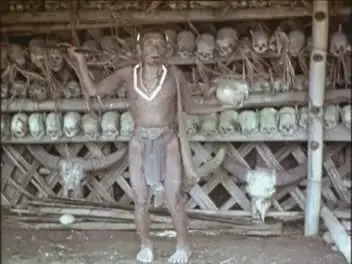
Skull racks. Under the eaves, tied against the wall or resting (53) on shelves are innumerable trophies. To the left there are several rows of enemies' heads, altogether 137, - apparently the largest collection in the area. The origin of most is still known and proudly recounted. (From the field notes of Christoph von Furer-Haimendorf, Date: 1970-08-26).
An extraordinary story of a 19-year old girl . Born with profound sensory neural hearing loss, Malsawmi has never had a chance to hear a thing clearly in her life. The struggle to understand why she is this way is not an extraordinary affair, but a family concern as attempts are made by the family to reclaim her sense of hearing. But when doctor inform the family that she is going to spend the rest of her life without the pleasure of sound, the family is devasted. Life gets worse as Malsawmi grows older and increasingly finds herself unable to fit in. Questions on why she is born this way begins to haunt her. Just when the prospect of ever living like a normal human being seems to evaporate, hope shows up in the form of a special school for children like- or much more disadvantaged tan- her. Better still, she realizes that she is not at all shut out by society because of her condition and continues her life despite the problems and challenges she has to face. Today, the sanguine Malsawmi bedazzles everyone with her phenomal dance moves, her involvement at local church and society, her sense of friendliness, and simply put her charming beauty that is natural only to special people.