The costumes of Indian women and the accessories which go with them are shown in this film Besides the saree, a popular wear, the documentary exhibits the pherar of Kashmiri women, colourful dresses of the Khasi and Naga women of Assam, the salwar and Kameez of the Punjab and the garara and odhani worn by girls from Uttar Pradesh.
MNF rebels on their final march from Parva to Aizawl. For almost two decades of underground activities they decided to give up arms and ready to talk for peace. It was an emotion welcome for the President Mr. Laldenga, Vice President Zoramthanga and the comrades. They have surrenderd but their future is uncertain.
Child trafficking has hit hard on the North Eastern States in the recent years. At times we read in news that a girl child is being rescued from big cities main land. NGOs of the North East State with the cooperation of the police department saved many of these innocents lives.
In this 4th episode of Doordarshan travelogue series "Explorer of the Misty Mountains", renowned filmmaker Mike Pandey takes us through the misty mountains of Nagaland
In this 4th episode of Doordarshan travelogue series "Explorer of the Misty Mountains", renowned filmmaker Mike Pandey takes us through the misty mountains of Mizoram
In this 4th episode of Doordarshan travelogue series "Explorer of the Misty Mountains", renowned filmmaker Mike Pandey takes us through the misty mountains of Meghalaya
In this 4th episode of Doordarshan travelogue series "Explorer of the Misty Mountains", renowned filmmaker Mike Pandey takes us through the misty mountains of Assam
In this 4th episode of Doordarshan travelogue series "Explorer of the Misty Mountains", renowned filmmaker Mike Pandey takes us through the misty mountains of Manipur
In this 4th episode of Doordarshan travelogue series "Explorer of the Misty Mountains", renowned filmmaker Mike Pandey takes us through the misty mountains of Assam
In this 4th episode of Doordarshan travelogue series "Explorer of the Misty Mountains", renowned filmmaker Mike Pandey takes us through the misty mountains of Assam
Every winter, the Bumchu or 'sacred water ritual' of Tashiding is held on the full moon night of the first month of the lunar calendar, usually falling in February or early March.On this occasion, pilgrims from all over Sikkim, Bhutan and Nepal converge onto the monastery of Tashiding in West Sikkim with the hope of obtaining a few drops of the Bumchu water, held to be an elixir of long life and contain the seed to enlightenment.The ritual has been held by the monks of Tashiding since the year 1646.
This film highlights the incident and shows how the families concerned dealt with the tragedy and how they are struggling to cope with it. In 2001 in Aristo Bawri Mansion Dhankheti an atrocious incident occurred that shocked and the town of Shillong, when eight innocent people were shot.
A preacher preached in Polo market. Audience listenig to the preacher attentively. End Time Evening in Polo is part of series of films called Tourist Information for Shillong by splitENDS
Bosco Reach out has been associated with the promotion of Self Help Group, particularly on empowerment of women through group activities. Bosco Reach Out Self Help Group movement has encompassed the states of Assam and Meghalaya covering 16 districts. Intiated several programmes to improve community health.
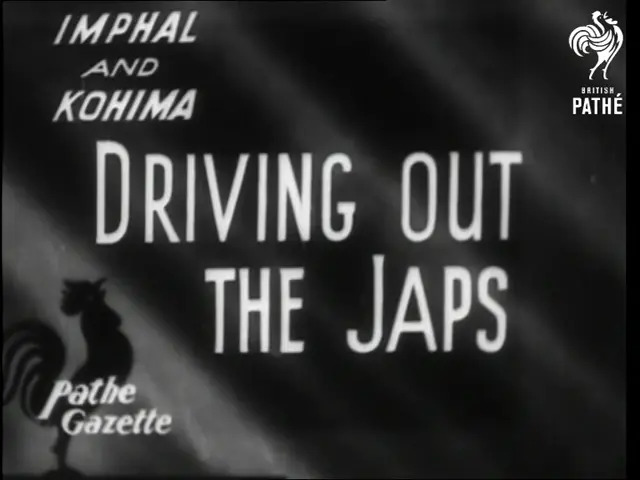
Item title reads - Driving out the Japs. Imphal and Kohima. India. Various shots of Lord Louis Mountbatten inspecting and shaking hands with Indian soldiers and British men of the 14th Army. They are near the Burmese border. He looks at captured Japanese tanks and a 'sticky' bomb, a type of hand grenade that secures itself to any metal it is thrown against. Various shots as airmen strap on their jungle emergency kit before getting in their planes. Various shots as Hurricanes (Hurri-bombers) taxi and take off from jungle aerodrome. Air to air shots of planes. Various shots of explosions in jungle village. C/U British and Indian troops firing Vickers machine gun and bren guns. Field telephones are used to give positions. M/S infantry moving forward. M/S's as troops pose with captured Japanese equipment and flag. M/S infantry and tanks advance along jungle road in the rain.
Der Terminus Matriarchat ist ein Kunstwort, das im deutschen Sprachraum erstmals Ende des 19. Jahrhunderts auftauchte,[8] in Anlehnung an die bis dahin gebräuchlichen Begriffe Mutterrecht und Gynaikokratie. Es setzt sich zusammen aus lateinisch mater ‚Mutter' und altgriechisch archein ‚herrschen' beziehungsweise ‚walten' oder auch altgriechisch ????, arché. Im Neugriechischen bedeutet arché ‚Macht, Herrschaft'; im Altgriechischen ‚Beginn, Anfang'Die Anfänge der Theorien zu Matriarchaten entstammen rechtshistorischen und ethnologischen Beiträgen des 18. und des 19. Jahrhunderts.[9] Der historische Materialismus (aber auch schon Bachofen) versteht das Matriarchat als eine allgemeine und notwendige Stufe der Gesellschaften der Ur- und Frühgeschichte.[10] Im 20. Jahrhundert gehörten sie zum Bestand marxistisch orientierter Kulturwissenschaften.[11] Dabei wurden auch schwärmerische Elemente mit historischen Tatsachen verbunden, um einen Gegenentwurf zur patriarchalischen Struktur westlicher Industriegesellschaften zu gewinnen. Das Patriarchat wurde weitgehend für soziale Zustände und moralische sowie psychologische Haltungen und Zwänge verantwortlich gemacht und das Matriarchat dabei entweder positiv als utopischer Urzustand der Gesellschaft oder abwertend als rückschrittliche Kulturstufe gedeutet.
Seit dem 19. Jahrhundert luden zahlreiche Wissenschaftsdisziplinen, kulturelle, soziale und religiöse Strömungen den Begriff -- oft unter der Bezeichnung „Mutterrecht" -- mit immer wieder anderen Vorstellungen und Inhalten auf und verwendeten ihn in dem jeweiligen historischen und kulturellen Zusammenhang entsprechend ihrer Weltanschauung. Es wurde auch darüber gestritten, ob es sich bei dem Matriarchat um Fakten oder Wunsch- bzw. Angstbilder handelt.[4] Es ist weitgehender Forschungskonsens, dass „sich das Matriarchat als Mutterherrschaft spiegelbildlich zum Patriarchat historisch nicht nachweisen lässt".[5] Synonyme für Matriarchat sind die heute kaum mehr verwendeten Begriffe Mutterrecht und Gynäkokratie[6] (z. B. Johann Jakob Bachofen); für matriarchal sind gebräuchlich: matriarchalisch, matrizentrisch (z. B. Marija Gimbutas) und matristisch (z. B. Wilhelm Reich). In Abgrenzung dazu beschreiben die verwandtschaftsethnologischen Begriffe matrilinear, matrilokal, uxorilokal Abstammungs- und Wohnsitzregeln. Mit Matrifokalität wird in der Ethnologie eine zentrale Rolle von Müttern in matrilinearen, patrilinearen oder anderen Verwandtschaftssystemen bezeichnet.