
Browse Items
-
 Refugee Camp 1983 - Nellie Massacre (G02038316)International relief organisations mount major operations in refugee camps in Assam after the massacre of Bengali immigrants in state election violence. Many immigrants are still leaving their villages for fear of violence from hill tribes.
 -
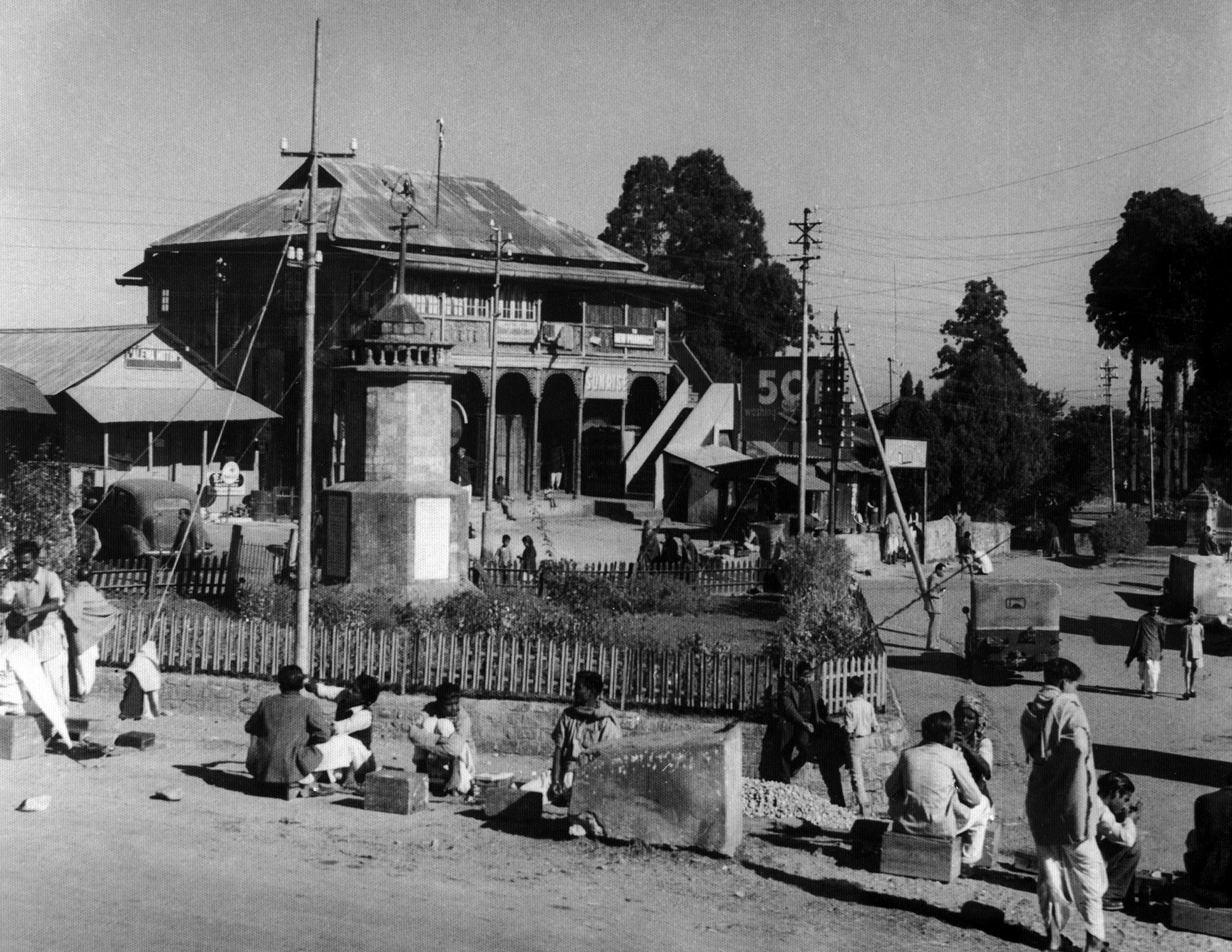
 Shillong Traffic CongestionTraffic congestion rules the roost in every part of the city crying for a solution that seems too distant a dream in the current messy scenario.
 -
 Shed no more bloodIn the backdrop of insurgency in Nagaland and the ongoing peace process, the Film looks at the life and work of Neidonuo Angami, a leader of the Naga Mothers Association, honoured with the Padma Shri in 2003 and nominated for the Nobel Peace Prize in 2005.
 -
 Shako Spirit Possession In LachenThe videos shows an insight into the practise of Spiritual Possesion in Sikkim
 -
 Saving The Wild - Wild Life Rescue And Rehabilitation- ExcerptThe Film understands wild life rescue and rehabilitation in one of the prime wild life habitats of India – Kaziranga, Assam.
 -
 Sangai - Dancing Deer of ManipurSangai, the Dancing Deer of Manipur, is based on Keibul Lamjao, a dance-drama choreographed by Chaaotombi Singh for the Jawaharlal Nehru Manipur Dance Academy, Imphal, a constituent unit of Sangeet Natak Akademi, New Delhi. The dance-drama was first presented outside Manipur in Nritya Natika, an all-India dance-drama festival in Delhi organized by Sangeet Natak Akademi in November, 1985. Keibul Lamjao attracted critical attention for its sensitive treatment of a contemporary Indian choreography. Sangai renders the dance-drama in film the means of the medium harnessed to choreographic ends. Much shorter than Keibul Lamjao, the film retains the essential stage freatures of the dance-drama. Sangai tells of the plight of a species decimated by loss of habitat. The narrative comes from a Manipuri legend of wide popular appeal. Kedang, a chieftain, leads a hunting expedition into the forest at the king's command. There he traps a Sangai to fulfil a wish of his betrothed, Tonu, but returns with the prize to find her gone, abducted by the king. Sangai employs the legend to bring home its message of conservation. Sangai (Cervus Eldi Eldi), are a regional race of the brow-antlered deer. Peculiar to Manipur, they are now reduced to a herd of a hundred in the sanctuary of Keibul Lamjao. The peril they face is the peril of all species driven towards extinction.
 -
 Sagolgi Eigi Wari (Pony And Me)Sagolgi Eigi Wari is an intimate journey that follows the trail of a society hit by armed conflict, caught up in ethnic politics and ignored by the larger mainstream consciousness.
 -
 Sacred SpaceThe Film attempts to explore the role that the Maibis have played and are playing, their relevance and the threat to their very existence posed by the forces of ‘development’ and patriarchal mindsets.
 -
 Sabin AlunOf the hundreds of versions of the Ramayana, Sabil Alun, is a living oral tradition of the animistic tribal society of the Karbis of Assam. The Film is an attempt to recreate the tale in a contemporary context where the animistic point of view gets prominence.
 -
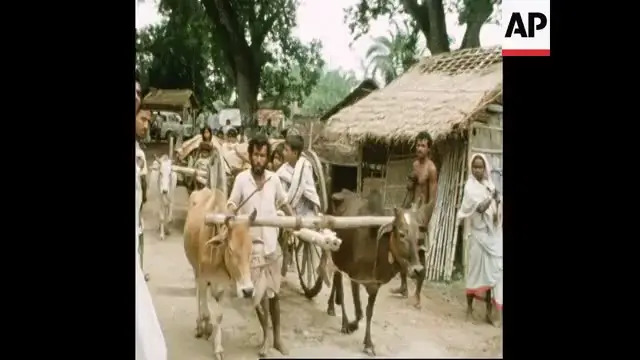 RR7121A India The Bengal Refugee ProblemThree million Bengali refugees are crowding into camps in the frontier towns of West Bengal, and the Indian authorities expect the final total to reach six, or even seven millions. The cost of providing food, shelter and clothing for such a multitude is far beyond the physical or financial resources of India. Mrs. Gandhi has declared that India cannot be permanently saddled with an extra six million people. What concerns her is that a 'Palistinian' situation could develop, with Bengali guerrilla organisations drawing support from the discontented homeless in the camps and thus creating further unrest in an already unstable part of India. Some Indians are now saying the problem can only be solved by fighting a short war with Pakistan and thus imposing a settlement under which the refugees could return to their homes in East Bengal.
 -
 Rocking the HillsRocking the Hills' is a journey into the musical traditions of the states of North East India. Music plays an important part in these states as it represents a natural harmony in the culture. As much of the parts are English speaking, musical genres like jazz, blues, country and folk get intertwined and hybridised with the local tunes and what emerges is a unique Indo-Western composition. The film features bands like Soulmate, Great Society and Abiogenesis and some of their music, which reflect the emotions and conditions the people in the North East share. The world record for the biggest guitar ensemble is also featured in the film.
 -
 River Taming MantrasOver the last 50 years the government has built 14,000 kilometres of embankments in an attempt to tame the rivers of eastern Uttar Pradesh, Bihar, Assam and Orissa. Despite this massive expenditure, losses due to flooding and the area that is now vulnerable to flooding has increased. 16% of Bihar is now permanently waterlogged, a direct consequence of the construction of embankments.''River Taming Mantras' explores the technological, economic and political rationale that underlies the adoption of such flood control measures. The film argues that because these rivers carry an enormous silt load, they have enormous power. Attempts to control these rivers are unlikely to succeed. On the other hand, the vast sums spent on the building and maintenance of these embankments provides endless opportunities for the siphoning of funds. Ultimately, it is the poor people who suffer - migrating to other states, towns and cities in search of food and shelter.